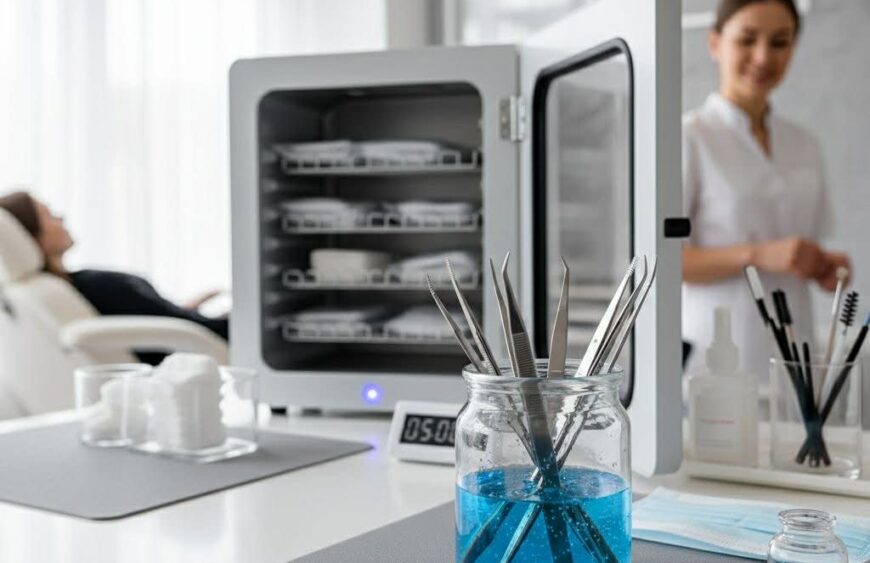
Hygiene and client safety are essential in lash extensions. Unclean or improperly sterilized tweezers can cause infections, contamination, or reputational harm. Follow a clear protocol compliant with Romanian regulations.
Key points:
The sterilization area must be properly set up when needed.
Reusable instrument sets go through cleaning, disinfection, verification, packaging, sterilization, and storage.
Maintain a sterilization log (date, time, contents, operator).
Instruments not used immediately or stored over 24 hours must be resterilized.
Procedure (summary):
1) Initial cleaning: after each use, wipe with 70–90% isopropyl alcohol and remove residues.
2) Washing: warm water + neutral soap; use a small brush; rinse thoroughly.
Note: You can replace this with a concise version in the target language if needed.
Immediately after each use, clean the tweezers with a disinfectant solution, e.g., 70–90% isopropyl alcohol.
Use a clean wipe or cotton.
✔️Drying
Dry the tweezers completely – you can use sterile paper towels or a paper napkin that leaves no fibers.
Ideal: let them dry completely in the air, if you have time. Residual moisture can affect the sterilization process.
✔️Preparing the autoclave tray
Make sure the autoclave tray/equipment is clean, functional, certified, and CE-marked (as usable equipment under the legislation).
Choose the appropriate sterilization program: typically, for metal instruments that withstand high temperatures, a program at ~180 °C for 30–60 minutes (check the device’s manual for specifics).
Periodically check the device (every 3 months according to the sterilization section).
✔️Packaging the tweezers
Before sterilization, place the tweezers in special sterilization pouches (autoclavable) or, if the device allows, in heat-resistant metal trays.
The packaging must be approved for sterilization and, after the process, must be labeled with the sterilization date and the name of the person who performed the procedure.
If you choose to keep them sterile until the next use, the packaging must remain intact and stored in a controlled space.
✔️Sterilization
Insert the tweezers (in their packaging or tray) into the autoclave and close the door seal.
Start the complete sterilization cycle. Do not open before the cycle finishes.
Follow the parameters according to the device and the manufacturer’s recommendations.
✔️Cooling
After the cycle ends, allow the tweezers to cool inside the autoclave (if permitted) or in a controlled area, until they reach ambient temperature.
Avoid opening immediately if the internal temperature is high, as abrupt changes can compromise sterilization.
✔️Storage
Remove the tweezers and, if they were sterilized in pouches, seal the packaging.
Store in a sterile container or a clean rack, in the designated instrument storage area. The area must be dry, free of dust, and protected from unauthorized handling.
If the packaging is damaged or past its indicated shelf life (e.g., 24 h without a proper packaging), the instruments must be resterilized.
✔️ Useful additional tips
Check monthly (or at the interval recommended by the manufacturer) the condition of the autoclave/pupinel – filters, gaskets, heating elements, sterilization indicators.
Keep a sterilization journal: date, time, which instruments were sterilized, the technician’s name. This can protect your salon in case of inspections.
Use chemical or biological indicators to confirm that the sterilization process was effective (in accordance with the manufacturer’s recommendations).
Avoid using disposable instruments as reusable – it is prohibited to reprocess single-use materials.
Set up the sterilization area clearly, separated from the work area, to prevent contamination.
Inform clients about your hygiene standards – this strengthens trust in your brand’s services.
‼️‼️‼️ Attention: Not all tweezers are suitable for autoclave sterilization in a pupinel. Tweezers coated with paint, colored lacquer, glitter, or other decorative finishes SHOULD NOT be thermally sterilized, as these coatings can deteriorate, melt, or release toxic substances at high temperatures. Only fully metal tweezers or those coated with plasma (PVD/Titanium Plating), without paint or decorative elements, are safe for sterilization in a pupinel. Tweezers with adhesives, inserts from other materials, glued components, or plastic parts are not thermally sterilizable and must be cleaned and disinfected by alternative methods.
🚨. Conclusion
Adhering to these steps helps you offer a professional, safe service that fully complies with the law. Additionally, this level of hygiene contributes to the premium brand image that TABYA Lashes promotes. Clients will feel the difference—not only in perfectly executed lash extensions, but also in the trust that you keep them safe.
If your standards resonate with this article, it means you choose professional products with care and responsibility.